Oxide vs. AWS Outposts
Key differences between AWS Outposts and Oxide for low latency, data residency, hybrid operations, and regulated workloads
Vendor-owned hardware in your data center
Hardware you own outright
Purchased-capacity pricing, never owned, must be renewed or returned
One-time purchase, fixed cost, unlimited usage
Requires highly available connectivity to a parent AWS region, not designed for disconnected operation
Fully local control plane that can run completely air-gapped
Management plane inherits remote region failures
Self-contained, no remote failure modes
Closed stack with no firmware or source-level transparency
Open source, verifiable from firmware to API
See how Oxide compares to your current Outposts deployment: infrastructure costs, operational overhead, and total ownership.
- Deployment-specific cost analysis
- Architecture comparison
- Migration planning session
What’s the difference between AWS Outposts and Oxide?
AWS Outposts is a managed service that delivers AWS infrastructure and services to on-premises and edge locations. The service extends the AWS experience to your data center by allowing you to run AWS services, tools, and APIs locally, while connecting to other services in your local AWS region.
The Oxide Cloud Computer, on the other hand, is deeply co-designed hardware and software that you own outright and operate yourself. There’s no parent region to stay connected to, no external control plane to protect, and it’s fully air-gapped when you need it.
Which one is right for you?
Who is Oxide right for?
Consider Oxide if you:
- Need your control plane to live on the rack, with the option of fully disconnected operation
- Prefer to own your infrastructure and depreciate it on your own schedule
- Need to inspect, verify, and control every layer of hardware and software for resilience, security, and upgrades
Who is AWS Outposts right for?
Consider AWS Outposts if you:
- Are trying to standardize on AWS APIs, IAM, EKS, RDS, S3, Nitro, and AWS-managed platform maintenance
- Only need a three-year commitment (Outposts is delivered on a three-year capacity subscription)
- Can tolerate the loss of management functions during occasional service-link interruptions
Predictable economics
Hardware purchased outright with open source software. No surprise consumption bills or software subscription renewals.

Every operation runs locally
Launch instances, attach volumes, manage your infrastructure. No API calls tunneled to a parent region, and no degraded operations when connectivity drops. Oxide runs completely air-gapped. Outposts is not designed for disconnected operation, even briefly.
Verifiable infrastructure
Hardware root of trust with open source firmware. Every layer is verified from silicon up.
Your cloud tools, your infrastructure
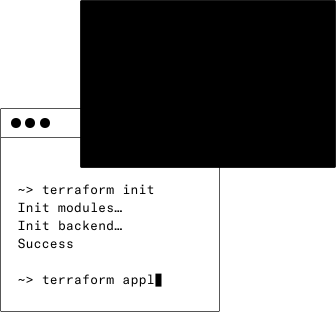
Terraform, Kubernetes, and your existing automation: first-class, supported integrations, no lock-in.


Plus broad compatibility
Standard VMs mean your existing software runs without modification
 Pulumi
 Prometheus
 Grafana
 GitHub Actions
 GitLab CI